With Vipin Thekk, 2 Nov 2023
Summary
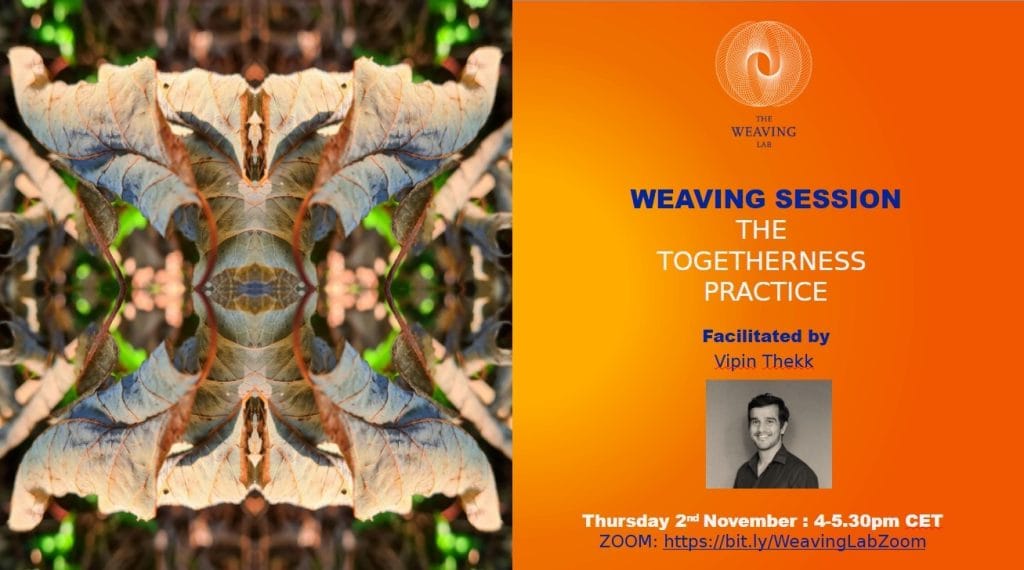
This session launched the “Togetherness Practice,” a framework developed over two and a half years of research to address why structural social change often stalls. The case was made that systems fail not because of mechanical flaws, but due to friction, mistrust, and power dynamics inside human relational spaces. Participants were paired for a coaching exercise to experience deep, non-advisory listening across the domains of mind, body, heart, and spirit. It ended with evaluations, feedback, and a comparison of collaborative human relationships with interconnected root systems of giant California redwood trees.
Key Learning Points
- The Relational Bottleneck: Social change processes rarely break down because of systems alone; they break down within the fractured relational spaces between human beings.
- Mindset vs. Heartset: Modern systems can easily punish surface-level bad behaviour (such as racism), but true systemic transformation remains blocked if the human heart has not caught up to intellectual shifts.
- The Totality of Intelligence: Authentic relationship-building requires engaging four distinct human intelligences simultaneously: mind, body, heart, and spirit.
- The “Togetherness” Soil: True systemic change relies on a triad model combining internal individual capacities, supportive external conditions, and a deliberate practice of relationship building.
- Non-Advisory Coaching: Providing a listener with strict rules against offering advice completely removes performance pressure, forcing them to become deep, holistic holders of space.
- The Redwoods Root Metaphor: Giant redwood trees reach heights of 380 feet with roots only 10 feet deep because they physically intertwine with one another, showing that collective human networks survive by holding each other up.
Action Points
- Cultivate Four Internal Capacities: Intentionally practice personal awareness, conscious meaning-making, courageous self-permission, and flexible responsibility.
- Nurture Four External Conditions: Build environmental spaces prioritizing active group receptivity, deep collective reflection, a true sense of belonging, and the capacity for emergence.
- Implement “Coursing” Breaks: Introduce a mandatory pause to slow down, take breaths, and actively scan bodily sensations before diving into rigid business agendas.
- Run the Unsticking Exercise: Pair up team members and have one person share a specific professional or personal bottleneck without receiving any peer feedback.
- Rotate Holistic Inquiries: Direct the designated coach to select one question each from the domains of mind, heart, body, and spirit to unlock an intuitive, non-intellectual line of inquiry.
- Anchor Self-Learning: Conclude every paired dialogue loop by requiring both individuals to aloud complete the phrase: “One thing I am learning about myself is…”.
- Test in Friction Zones: Proactively deploy this lightweight relationship blueprint inside highly polarized, extreme-narrative, or combative team environments to measure its stress limits.

References
- Lakota Tradition — Circle of Life Opening Prayer
- O’Donoghue, J. — “Bless the space between us” (Poem).
- Scharmer, O. — Theory U: Leading from the emerging future.
- Einstein, A. — Levels of consciousness problem-solving axiom.
- Wilber, K. — The Three Faces of God / Integral Theory.
Knowledge Base Categories: 1) Inner Work 2) Decolonisation, Equity & Inclusion