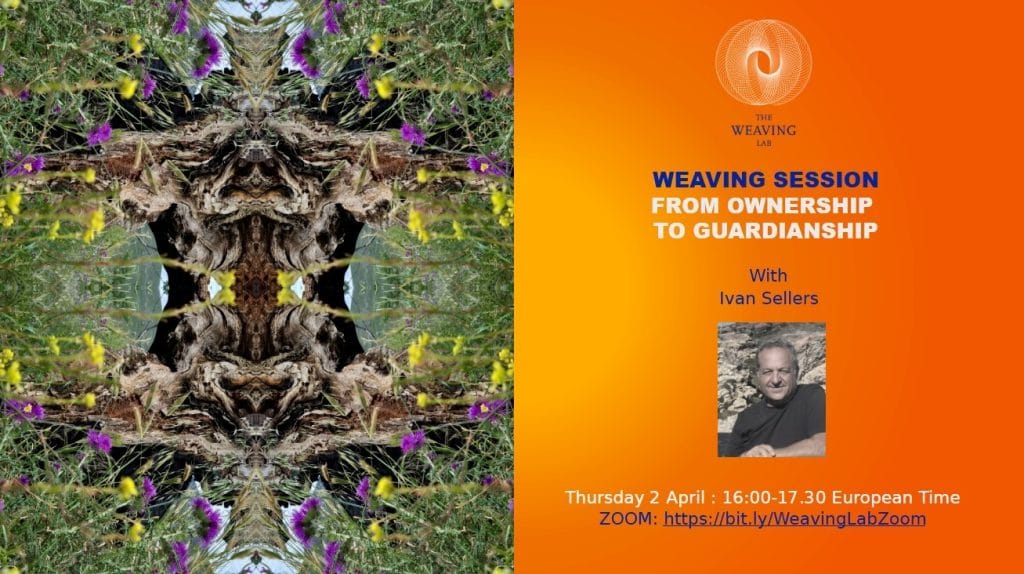
With Ivan Sellers, Terra Agora foundation, 2 April 2026
Summary
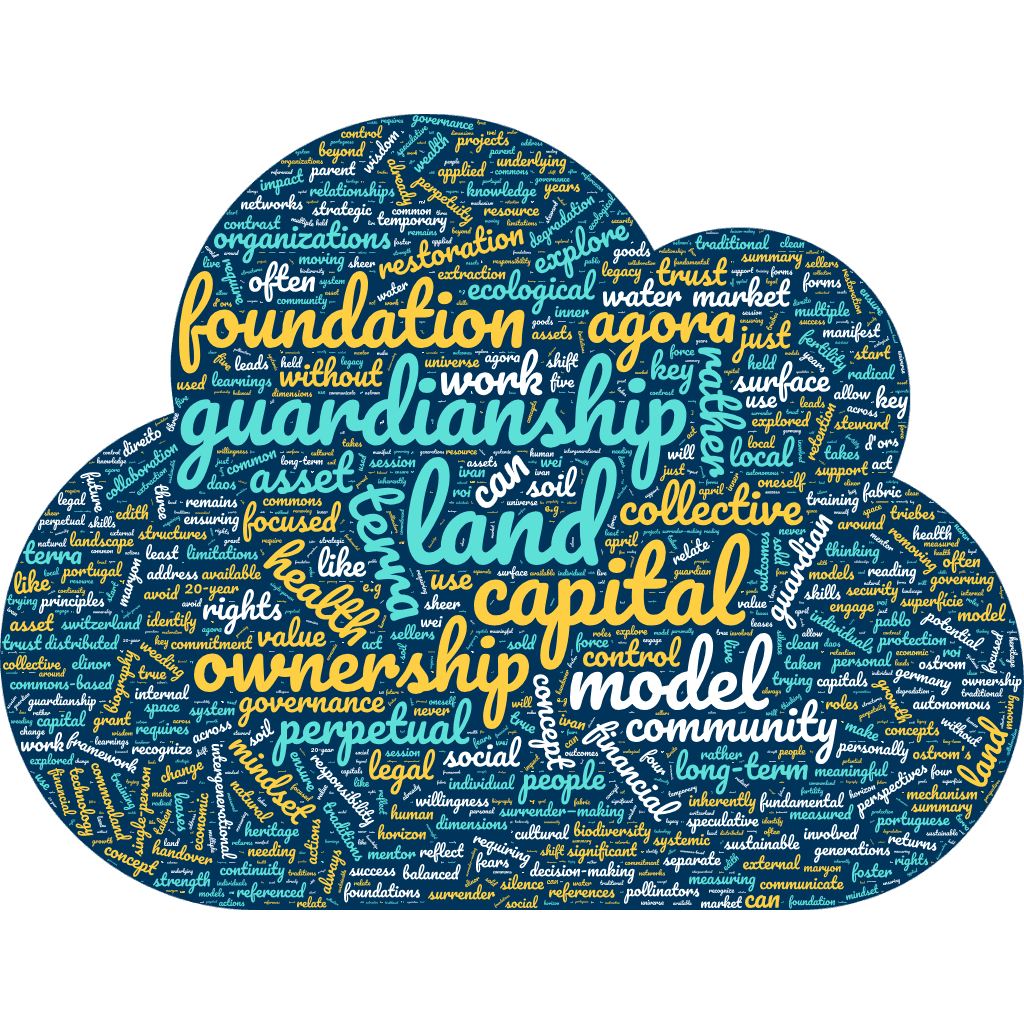
This session explored a fundamental shift in how we relate to land and assets: moving from the traditional model of “ownership” (focused on individual control and extraction) to “guardianship” (focused on collective responsibility, ecological health, and intergenerational legacy).
Key Learnings
- The Concept of “Wu Wei” (Doing Without Doing): A willingness to surrender—making oneself available so that the universe can work through you, rather than trying to force outcomes through sheer will.
- The Limitations of Ownership: Ownership is inherently temporary and often leads to the degradation of common goods (like clean water and soil). Guardianship, by contrast, is a perpetual commitment to the health of a system.
- The “Strategic Asset” Model: Through the Terra Agora foundation, land is taken out of the market and held in perpetuity. It can never be sold, ensuring it remains a resource for the community rather than a speculative asset.
- Five Forms of Capital: True value is measured across multiple dimensions, not just financial:
1. Natural Capital: Biodiversity, water retention, and soil fertility.
2. Social Capital: Networks of trust and community relationships.
3. Human Capital: The skills and training of the individuals involved.
4. Cultural Capital: Traditions, heritage, and local knowledge.
5. Economic Capital: Sustainable financial models that support the other four capitals.
- The 20-Year Horizon: Meaningful systemic change and ecological restoration require long-term thinking. Significant impact often takes 20+ years to manifest, requiring a “handover” mindset between generations.
Key Actions
- Identify Your Guardianship Roles: Reflect on where you already act as a guardian (e.g., as a parent or a mentor) and explore how that mindset can be applied to your work or community.
- Separate Use from Ownership: Explore legal structures (like “surface rights” or long-term leases) that allow people to steward and live on land without needing to personally “own” the underlying asset.
- Engage in Inner Work: Recognize that external guardianship requires internal “weeding.” Address personal fears around security and control to make space for radical trust and collaboration.
- Foster Collective Governance: Avoid single-person decision-making. In the Terra Agora model, a “guardian” is always a collective of at least three people to ensure balanced perspectives and continuity.
- Communicate Value Beyond Wealth: Start measuring the success of projects by the health of the pollinators, the strength of the social fabric, and the growth of local wisdom, rather than just ROI.
—–
References
Reading
- Pablo d’Ors: ‘Biography of Silence (referenced for the concept of surrender).
Foundations & Organizations:
- Terra Agora: A Portuguese foundation for land guardianship.
- Edith Maryon Foundation (Switzerland): model for removing land from the market.
- Triebes Foundation (Germany): model for perpetual land protection.
- Commonland: the “4 Returns” framework for landscape restoration.
Concepts:
- Surface Rights (Direito de Superfície): The legal mechanism used in Portugal to grant perpetual use of land.
- Distributed Autonomous Organizations (DAOs): potential future technology for commons-based governance.
- Ostrom’s Principles: Elinor Ostrom on governing the commons.
Knowledge Base Categories: 1) Regeneration and Universal Wellbeing 2) Decolonialisation, Equity & Inclusion