With Lian Zeitz and Barbara Bulc, 17 July 2025
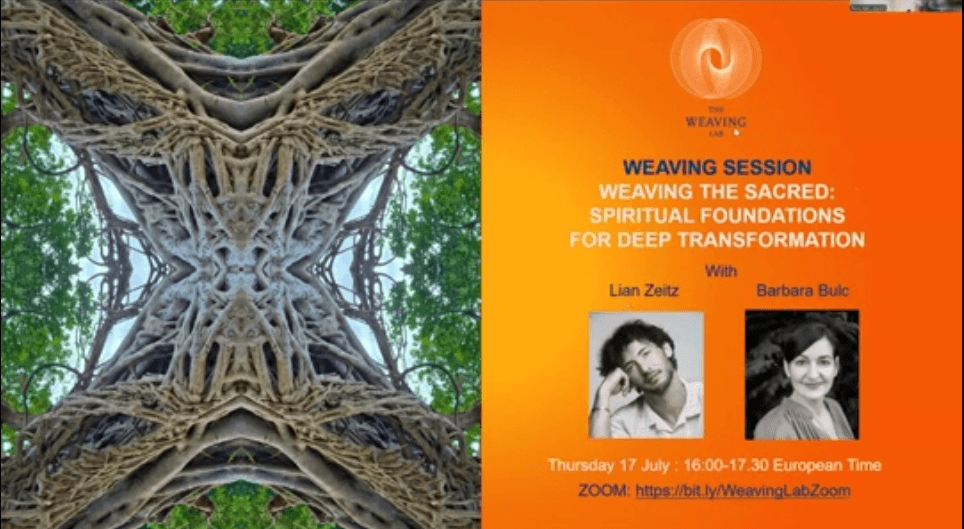
This session focused on integrating the sacred and spiritual into life and system-wide change. They argued the current global crisis stems from a profound rupture in relationships — with ourselves, each other, the more-than-human world, the living Earth and the sacred. And yet, glimmers of the sacred continue to call us home, increasingly visible across communities and movements through acts of care, collective grief and joy, and a growing remembrance of our shared belonging.
An embodied opening
The session unfolded as an embodied experience from beginning to end. It opened with Barbara’s immersive invocation—a shared reading aloud of an excerpt from Rainer Maria Rilke’s Ninth Elegy from Duino Elegies. The words were not analyzed or explained, but received—allowed to settle in the body and land in the heart, not merely as poetry, but as a spiritual summons. A shared pause followed, creating space for breath, sensation, and presence.
The Ninth Elegy, by Reiner Maria Rilke (excerpt)
Earth, is it not this that you want: to rise
Invisibly in us? – Is this not your dream,
To be invisible, one day? – Earth! Invisible!
What is your urgent command if not transformation?
Earth, beloved, I will. O, believe me, you need
No more Spring-times to win me: only one,
Ah one, is already more than my blood can stand.
Namelessly, I have been truly yours, from the first.
You were always right, and your most sacred inspiration
is that familiar Death.
See, I live. On what? Neither childhood nor future grows less…excess of being
Wells up in my heart.
Core reflections
Lian and Barbara shared how their work was an invitation to remember and reawaken spiritual dimension that have been largely forgotten or suppressed. Key reflections included:
- Spirituality serves as an antidote to the crisis of disconnection.
- Love should be centered as the “central unifying function” of social change practice.
- Collective trauma (eg. war, colonization, racism, displacement, ecological devastation, pandemics, systemic violence) is a primary factor that disconnects people from presence and relationships; is transmitted culturally and intergenerationally
- The words health, whole, and holy share a common origin, and spirit means “breath” or “life energy”.
- Embodied, lived experience is how the sacred is woven into culture and systems change.
Spirituality, Ethics in Systems Change
Lian highlighted that the exclusion of spirituality is aligned with systems of oppression and harm, such as the “extractive capitalist, often white supremacist model,” which diminishes ways of being that don’t fit. The work, therefore, is about restoring sacred ways of knowing that were suppressed. This restoration is experiential, and embodied.
The sacred is defined broadly to include:
- Making space for profound experiences of awe and wonder.
- Finding a deep sense of connection to our shared humanity and the Earth.
- Accessing something greater than ourselves and divine inspiration.
The integration of spirituality requires an ethic of care to “do no harm” and attentive to avoiding domination, control, or oppression. This includes engaging spiritual practices ethically with humility and accountability to prevent co-option and cultural appropriation, and actively working to heal spiritual and religious harm.
Moving into Practice
This contemplative ground carried into the second half of the session, where participants were invited into a reflective, creative practice. Participants were asked to recall moments of deep connection or awe (==visceral, emotional response to something greater than oneself—something vast, mysterious, or deeply meaningful, eg nature, art, beauty, life, death, epiphany etc) from their early lives and to express these memories through drawing, in silence, using paper and crayons. These drawings and stories were then shared in small groups.
The emphasis throughout was on lived, embodied experience—engaging memory, sensation, imagination, and story, rather than abstraction. The group dialogue was guided by two reflective questions:
- How is your spiritual experience—or moments of deep connection, or spiritual practice—shaping how you show up in your life or work, especially in relation to the land you inhabit or the culture(s) you carry?
- How might the Weaving Lab network continue weaving the sacred into our collective transformation?
Participant reflections echoed several themes:
- The need to do the “inner job” of integrating emotional, cognitive, and somatic aspects of the self.
- Treating self-care as an act of service that normalizes healthy behaviors for the entire system.
- The importance of being (presence) over talking or doing, which shapes and influences the field around us.
- A focus on curiosity and hospitable welcome to allow a person’s “inner intelligence to emerge,” based on the belief that everyone possesses innate wisdom.
Closing Song and Reflections
The session closed not with answers, but with a shared sense of listening—attuning to a spontaneous love song or prayer that wants to emerge when the sacred is welcomed back into our personal lives, collective work, and systems of change. Rather than offering a blueprint, the gathering invited participants into an ongoing practice of weaving: breath by breath, relationship by relationship, presence by presence.
Participants were invited to explore Spirituality Guides, developed by Collective Change Lab.
Key Learning Points
The core insights of this session are:
- The Root of Crisis is Disconnection: The current global crisis is seen as stemming from a profound rupture in relationships—with ourselves, each other, the more-than-human world, and the sacred.
- Spirituality as an Antidote: Spirituality is posited as an antidote to this crisis of disconnection , helping to reawaken a forgotten dimension in life and system-wide change.
- Love as the Core Function: Love should be centered as the “central unifying function” of social change practice.
- Oppression and Exclusion: The exclusion of spirituality is aligned with systems of oppression and harm, such as the “extractive capitalist, often white supremacist model,” which suppresses sacred ways of knowing.
- The Broad Definition of the Sacred: The sacred includes making space for awe and wonder, finding deep connection to shared humanity and the earth, and accessing something greater than ourselves and divine inspiration.
- The Power of Presence: Collective trauma is a primary factor that disconnects people from presence and relationships , emphasizing the importance of simply being (presence) over talking or doing, as it shapes the field around us.
Key Action Points
These points translate the session’s insights into concrete practices for individuals and those working for system-wide change:
- Center Love in Practice: Intentionally integrate Love as the foundational principle in social change work, ensuring it guides decision-making and interaction.
- Do the “Inner Job”: Commit to integrating the emotional, cognitive, and somatic aspects of the self (“the inner job”) to cultivate holistic presence and effectiveness.
- Prioritize Ethical Engagement: When engaging with spiritual concepts or practices, adopt an ethic of care to “do no harm” and actively work to heal spiritual and religious harm. Avoid generating domination, control, or oppression, and guard against co-option and cultural appropriation.
- Treat Self-Care as Systemic Service: View self-care as a necessary act of service. By practicing healthy behaviors, you normalize them for the entire system you influence.
- Cultivate Awe and Connection: Seek out and make space for profound experiences of awe and wonder in your daily life to restore a sense of the sacred and deepen your connection to the earth and shared humanity.
- Practice Hospitable Welcome: Approach others with curiosity and a hospitable welcome, creating space for a person’s “inner intelligence to emerge,” based on the belief in their innate wisdom.
Knowledge Bank Categories: 1) Inner Work, 2) Decolonialisation, Equity & Inclusion