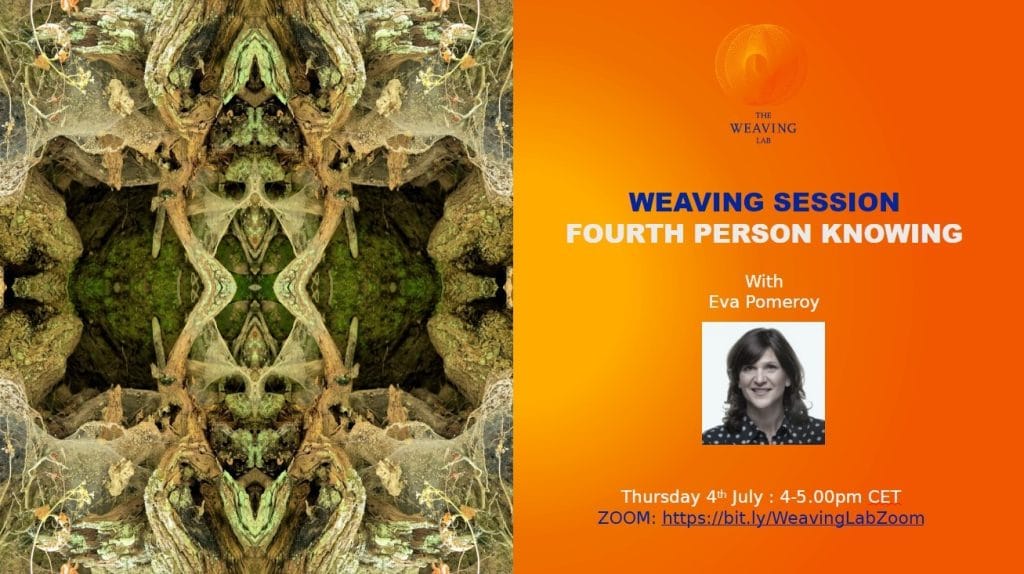
With Dr Eva Pomeroy, 4 July 2024
Summary
Dr Eva Pomeroy is Research Lead at the Presencing Institute and Co-founder/Managing Editor of the Journal of Awareness-Based Systems Change. Her session was on awareness-based systems change. She introduced the epistemological concept of “fourth-person knowing,” defined as a form of deep source intelligence that flows through individuals but originates from the surrounding collective or “social field”.
The session alternated between academic framing, silent mindfulness, and participant dialogue. It highlighted how shifting human awareness away from rigid, western individualism toward collective, non-local field perception can unlock profound action confidence and create highly effective, unexpected breakthroughs in institutional systems
Key Learning Points
- The Core Perspectives of Knowing: Mainstream research acknowledges three tiers: first-person (subjective introspection), second-person (intersubjective sense-making through dialogue), and third-person (objective observation and measurement)
- Defining Fourth-Person Knowing: This emergent tier describes knowledge that is neither wholly outside for observation nor entirely inside an individual’s personal boundary; it is knowing that comes through a person but is not of them
- Indigenous Cosmology Realities: Unlike Western academia’s individualistic framing, indigenous paradigms view knowledge as belonging to the broader cosmos, positioning humans merely as temporary interpreters
- The Five Strands of Field Phenomena: Pomeroy and Scharmer’s two-year inquiry maps distinct indicators of fourth-person states:
- An External Presence: Experiencing an awareness looking back at you that isn’t you.
- Perceptual/Sensory Shifts: Physiological changes such as opening sensations in the chest, visual changes in light, or deep atmospheric warmth.
- Ecosystem Awareness: Moving to a collective field state where you hold the whole while seeing yourself mirrored back through it.
- Action Confidence: Gaining an emboldened, visceral trust to drop masks and step authentically into uncharted actions.
- Shocking Operational Efficacy: Activating long-term, generative systemic outcomes that are both rapid and profoundly surprising.
- Non-Local and Trans-Temporal Fields: The social field is entirely non-local and unbound by immediate time. Sacred or historically charged sites can preserve field resonance across generations, making individual connection possible even when isolated.
Key Action Points
- Adopt the Fourth-Person Stance: Approach complex facilitation or community building not as a teaching exercise, but as a deliberate stance to carve out spaces for deeper relational care and for intuition to surface.
- Integrate Collective Senses: Use prolonged immersive experiments (like multi-day deep-nature group treks) to actively balance individual perceptions against felt collective field dynamics.
- Incorporate Generative Scribes: Employ visual anchors like real-time graphic journaling to sense when a space is shifting and help bring unspoken insights safely over thresholds.
- Utilize 4D System Mapping: Treat physical and spatial social mapping exercises as rigorous methodologies to map deeper stakeholder system dynamics.
- Anchor Internal Artistry: Reframe systemic change as a deliberate act of art where you permit yourself to patiently confront and manifest a future form seeking expression through you.
- Engage via Social System Maps: Leverage ongoing network map projects and dedicated community blending spaces to identify hidden synergistic pathways between peer projects.

References
- Buber, M. I and Thou / Dialogic Theology Philosophy (referenced regarding the narrow ridge and the realm of the between).
- Goodchild, M. Relational Systems Thinking (referenced regarding Indigenous paradigms of knowledge).
- Pomeroy, E. & Scharmer, O. “Fourth Person: The Knowing of the Field,” Journal of Awareness-Based Systems Change.
- Presencing Institute Case Studies. The Gaia Initiative, ulab 1x/2x, and the UN SDG Leadership Lab in Liberia
- Roche, E. Theory U in Action (referenced text on the surprising efficacy of field awareness).
- Scharmer, O. Self-Transcending Knowing (referenced foundation piece regarding deep source epistemologies)
- Wilson, S. Research is Ceremony: Indigenous Research Methods
Knowledge Base Categories: 1) Weaving Methods 2) Inner Work