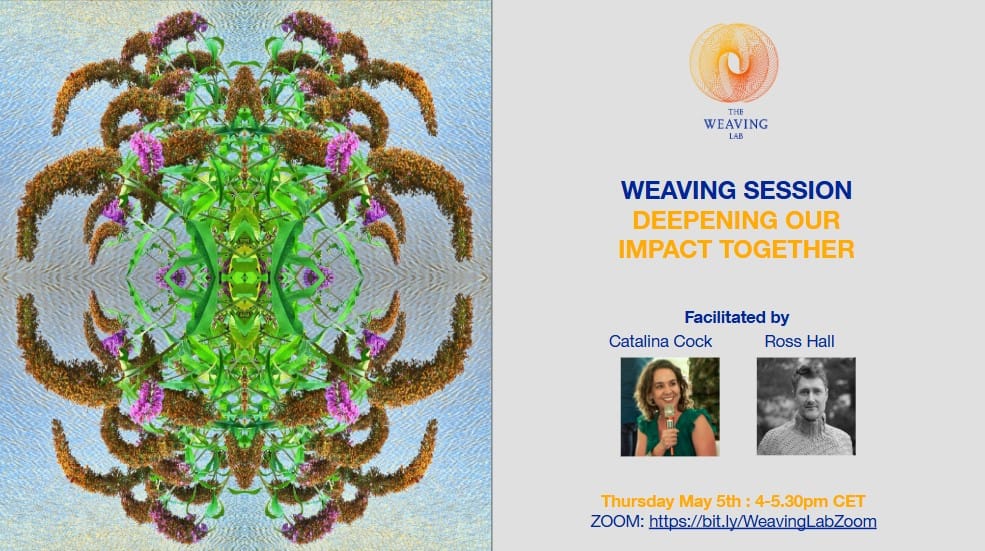
With Catalina Cock and Ross Hall, 5 May 2022
Summary
This session looked into methods to scale and professionalize systemic “weaving” practices designed for global and individual well-being. After opening with a parable by Indian mystic Sri Ramakrishna about unconscious inner states that govern human behaviour, breakout groups explored case studies from youth and systemic change initiatives in Colombia and Massachusetts. Rigid, quantitative funding metrics and alternative non-linear frameworks like the “Most Significant Change” methodology and Three Horizons transitional model were discussed.
Key Learning Points
- Ingrained childhood environments dictate natural adult propensities
- Weaving operates as a living process of constant transformation
- Exclusive community language creates abstract barriers for newcomers
- Ego stands as a prominent barrier to advancing alignment
- Standard quantitative evaluations commodify and linearize human relationships
- Field-level change stories provide rigorous qualitative metric data
- The Three Horizons framework validates structurally messy transitions
- Sustained group conversation naturally uncovers common identity alignment
Key Action Points
- Share sample project reporting documents
References
Literature:
- ‘The flower and fish seller’ – allegory by Sri Ramakrishna
Case Studies:
- Vulnerable youth peacebuilding social labs (Colombia)
- North Central Massachusetts change-maker education frameworks
Evaluation Frameworks:
- Most Significant Change approach (UNICEF)
- H2 Three Horizons framework
Knowledge Base Categories: 1) Weaving Methods 2) Regeneration & Universal Wellbeing