With Luzette Jaimes and Russ Gaskin, 6 April 2023
Summary
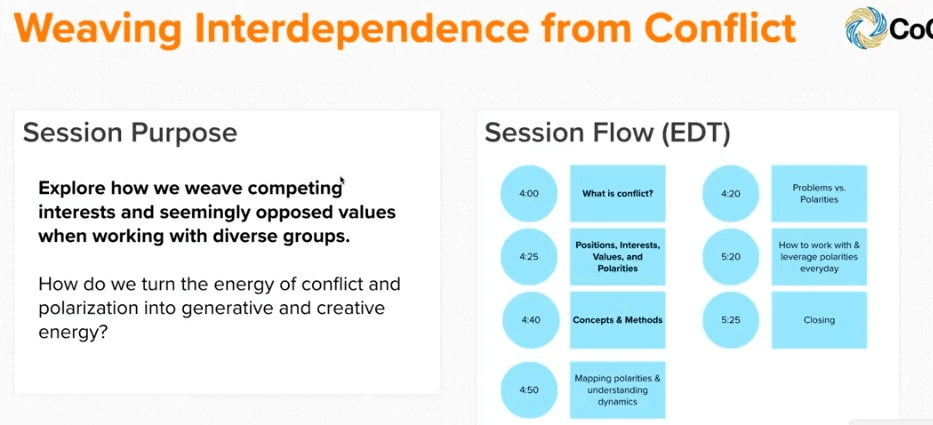
This session focused on moving groups from polarization to collaboration by exploring the interdependence of seemingly competing interests and values. Using the “Positions, Interests, Values, and Polarities” iceberg framework, the presenters demonstrated how to look below superficial conflicts to leverage underlying systemic tensions constructively.
Key Learning Points
- The Values Iceberg: Superficial arguments exist at the Positions level (preferred solutions). True collaboration requires diving deeper into situational Interests (what people try to solve), abiding Values (why they care), and systemic Polarities (interdependent truths).
- The Nature of Conflict: conflict was defined as “two things trying to occupy the same space at the same time”.
- Problems vs. Polarities: Problems are discrete choices with a definitive endpoint (e.g., buying a red vs. blue car). Polarities are ongoing, interdependent alternatives that cannot be solved, only leveraged over time (e.g., activity vs. rest, or self-interest vs. common good).
- Biology of Tension: The threat of conflict can trigger subconscious neurological threat responses that reduce blood flow to the brain, stall creativity, and narrow perspective. Establishing safety restores a “socially engaged” state vital for problem-solving.
- Polarity Dynamics:
- Tunnel Vision & Stereotyping: Focusing exclusively on the upsides of one value while highlighting only the downsides of the opposite view creates polarization.
- Leverage vs. Balance: Polarities require an ongoing fluid cycle—much like inhaling and exhaling—rather than a static, stagnant balance.
Action Points
- Name Creative Tensions Early: Outline the creative tensions at the very beginning of a project or meeting to align expectations about the need to work with them together
- Practice Polarity Aikido: Avoid “polarity karate” (defensively punching back with your own points). Instead, deeply listen to and validate an opponent’s value before introducing your own (interdependent) value.
- Map Tensions Incrementally: In heavily polarized environments, begin by mapping and honoring the dominant group’s preferred value and fears first. Then introduce the upsides of the alternative view, and then name the downsides of their own position last.
- Differentiate, Validate, and Integrate: Explicitly state the legitimate truth within opposing sides before guiding the team toward an integrated solution that holds both perspectives simultaneously.
- Reframe the Debate: Actively step into a team conflict and reframe the narrative by stating, “I hear a conflict here, but I believe that you are both right.”

References
- CoCreative’s Values Iceberg – the framework described above
- Hands-On Polarity Thinking – a manual on polarity thinking from CoCreative
- Adam Kahane – Power and Love (Book exploring the polarity of power and affection)
- Dr. Martin Luther King Jr. – 1963 Speech discussing the interdependence of reckless power and anemic love.
- Robert Greenleaf – Servant Leadership framework (The polarity of serving and leading).
- Jim Collins – Corporate research regarding the organizational tension of “preserving the core and stimulating change”.
Knowledge Base Categories 1) Decolonialisation, Equity & Inclusion 2) Weaving Methods