With Carlos Alvarez Pereira, Secretary General of the Club of Rome, 5 March 2026
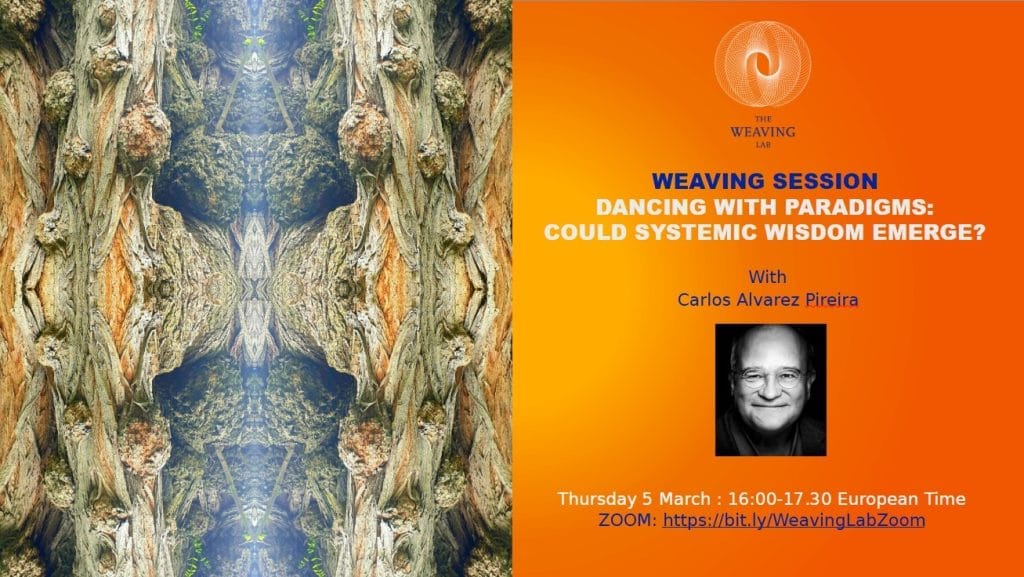
This session covered the ‘The Fifth Element’ program – an initiative focused on fostering mutual transformation across disciplines, generations, and cultures to achieve equitable well-being on a healthy planet.
Key Learning Points
- The Paradigm Shift: Building on the work of Donella Meadows, the program emphasizes that changing paradigms—the worldviews and mindsets that shape our systems—is the most effective leverage point for systemic change.
- “Dancing with Paradigms”: This concept suggests that no single paradigm holds the complete truth. Dealing with complex systems requires an attitude akin to dancing, which involves the whole body and intuition rather than just rational intelligence.
- The Trap of Separation: A critical systemic failure is the human tendency to move from distinction to separation and exclusion (the “us vs. them” mentality). This leads to a sense of entitlement to dominate or destroy others and nature.
- The Limitations of Modernity: Modernity is “unreasonably effective” at surviving crises by deepening its existing nature without addressing underlying issues. Breaking this cycle requires learning that moves in a fundamentally different direction.
- Redefining Capital: The program proposes deconstructing the concept of capital and reframing it as heritage, which emphasizes the need to care for all contributors—both human and natural.
- Criticality as Opportunity: Crises and “critical points” open a space for new possibilities. While some outcomes can be negative, these moments provide the best opportunity for positive emergence and systemic transformation.
- Working Across “Bubbles”: Societal silos (academia, politics, finance, etc.) each operate with an internal logic that may seem successful but is collectively destructive. True transformation requires crossing these chasms and weaving together different types of knowledge, including ancient wisdom and modern science.
Action Points
- Ask Better Questions: Rather than providing rigid recipes for change, focus on asking more profound, radical questions that challenge existing structures.
- Foster Mutual Evolution: Recognize that learning and change never happen in isolation. Actively seek to evolve in mutuality with those on the “other side” of societal chasms.
- Create Conditions for Emergence: Identify and influence the conditions that allow positive, self-reinforcing dynamics to flourish during times of crisis.
- Engage with The Fifth Element: The program invites participation through sharing impact stories, blog entries, or discussion papers via their updated website to help create a “mycelium” of resonant ideas and practices: https://thefifthelement.earth/get-involved/
- Practice “Weaving”: Actively connect diverse threads of knowledge and people to build momentum for a shift toward global well-being and peace.
You can view the slide presentation here
References
- Botkin, J. W., Elmandjra, M., & Malitza, M. (1979). No Limits to Learning: Bridging the Human Gap. A Report to the Club of Rome. Oxford: Pergamon Press.
- Meadows, D. H. (1999). Leverage Points: Places to Intervene in a System. Hartland, VT: The Sustainability Institute.
- Meadows, D. H. (2002). Dancing with Systems. Systems Thinker.
- Meadows, D. H., Meadows, G., Randers, J., & Behrens III, W. W. (1972). The Limits to Growth. New York: Universe Books.
- Pereira, C. A. (2023). Dancing with Paradigms. The Fifth Element Discussion Paper, Club of Rome.
Knowledge Base Categories 1) Regeneration & Universal Wellbeing 2) Future of Weaving